How to Choose a Dog Food: What Actually Matters
Skip the marketing words. Look for a complete-and-balanced statement, a company with real nutrition expertise, and the right amount.
Pet food labels are full of words like natural, holistic, human-grade and ancestral. Most of them don't tell you whether the food is good for your dog. A few things do.
1. Look for the complete-and-balanced statement
In the U.S., find the AAFCO nutritional adequacy statement on the bag. You want something like:
"[Product] is formulated to meet the nutritional levels established by the AAFCO Dog Food Nutrient Profiles for adult maintenance."
or, even better, a statement that the food passed AAFCO feeding trials. Check that the life stage matches your dog: growth (puppies), adult maintenance, or all life stages. Large-breed puppies need a food made for large-breed growth.
Foods labeled "for intermittent or supplemental feeding" aren't complete and shouldn't be your dog's main diet.
2. Ask who makes it
The World Small Animal Veterinary Association (WSAVA) suggests asking a pet food company:
- Do you employ a full-time, qualified nutritionist (a board-certified veterinary nutritionist or a PhD in animal nutrition)?
- Who formulates your foods?
- Do you run feeding trials or other research?
- What quality control do you use?
A good company will answer clearly. If they won't, that tells you something.
3. Feed the right amount
Even the best food causes problems if your dog eats too much of it. Measure meals and keep your dog lean. It matters more than any ingredient list.
About trends
- Grain-free: Since 2018 the FDA has looked into reports of a heart disease called dilated cardiomyopathy (DCM) in dogs eating many grain-free, legume-heavy diets. A cause hasn't been confirmed and research continues. Most dogs don't need to avoid grains. True grain allergies are uncommon. If you feed grain-free, talk to your vet.
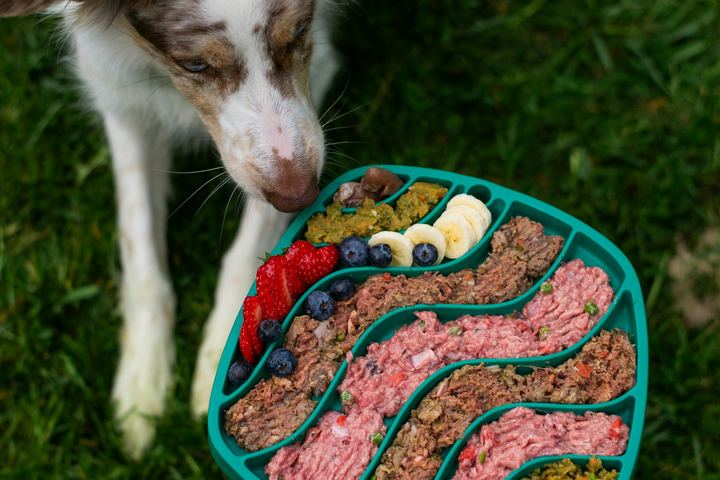
- Raw diets carry a real risk of Salmonella and Listeria for dogs and the people in your home, especially children, older adults and anyone with a weak immune system. If you choose raw, handle it like raw meat for humans.
- Home-cooked diets are often missing key nutrients unless they're formulated by a veterinary nutritionist.
- Vegan diets can be complete only if they're carefully formulated. Talk to your vet before switching.
Changing foods
Switch gradually over about a week, mixing more of the new food each day to avoid an upset stomach.
This guide is general information, not veterinary advice. If your dog is sick, hurt or acting unusually, call your veterinarian.